Case Study

Slimepocalypse

The winter holidays are pretty hectic, especially for someone who loves to give gifts. There are just too many people to consider, and I for one get pretty overloaded. One Christmas, however, a few years ago, my partner and I decided to set some new ground rules. Rather than being stressed about getting enough presents for each other, we’d stick to small things, and get a joint gift using our savings. That way it’s one less thing to worry about, at least in theory. 

Unfortunately, it’s not always that simple with me. I’m known to go above and beyond, especially for those I care about. So, as Christmas approached rapidly, I looked at the few wrapped gifts I had gotten for my husband and felt like I should be doing more. After a lot of thought, I realized I could do a spin on Christmas. So, I hid the presents. I made sure to pick weird places, like the compartment for a spare tire in his car, and the fall decoration tub in our garage. 

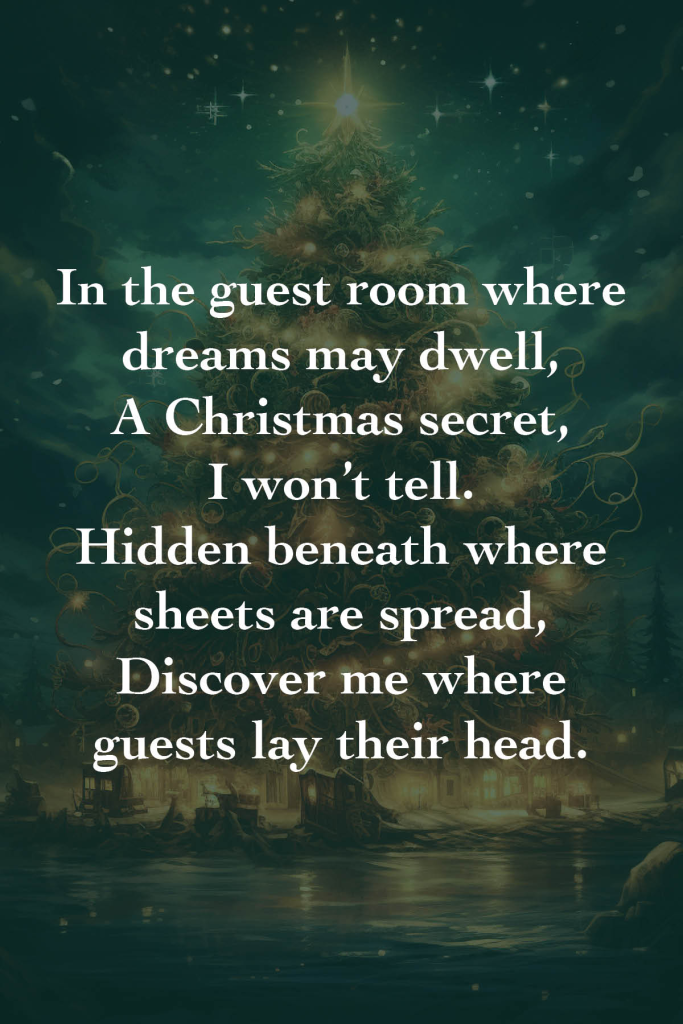
Next, I developed a series of christmas themed riddles, and hid them behind coded messages (a combination of shifted alpha-numeric and pig pen) and put the first hint in a puzzle box. A week before Christmas, I hid the puzzle box in his glove compartment and pretended to need something from it when we were coming home from a trip. He loved every second of it, and did a great job solving all the puzzles. 

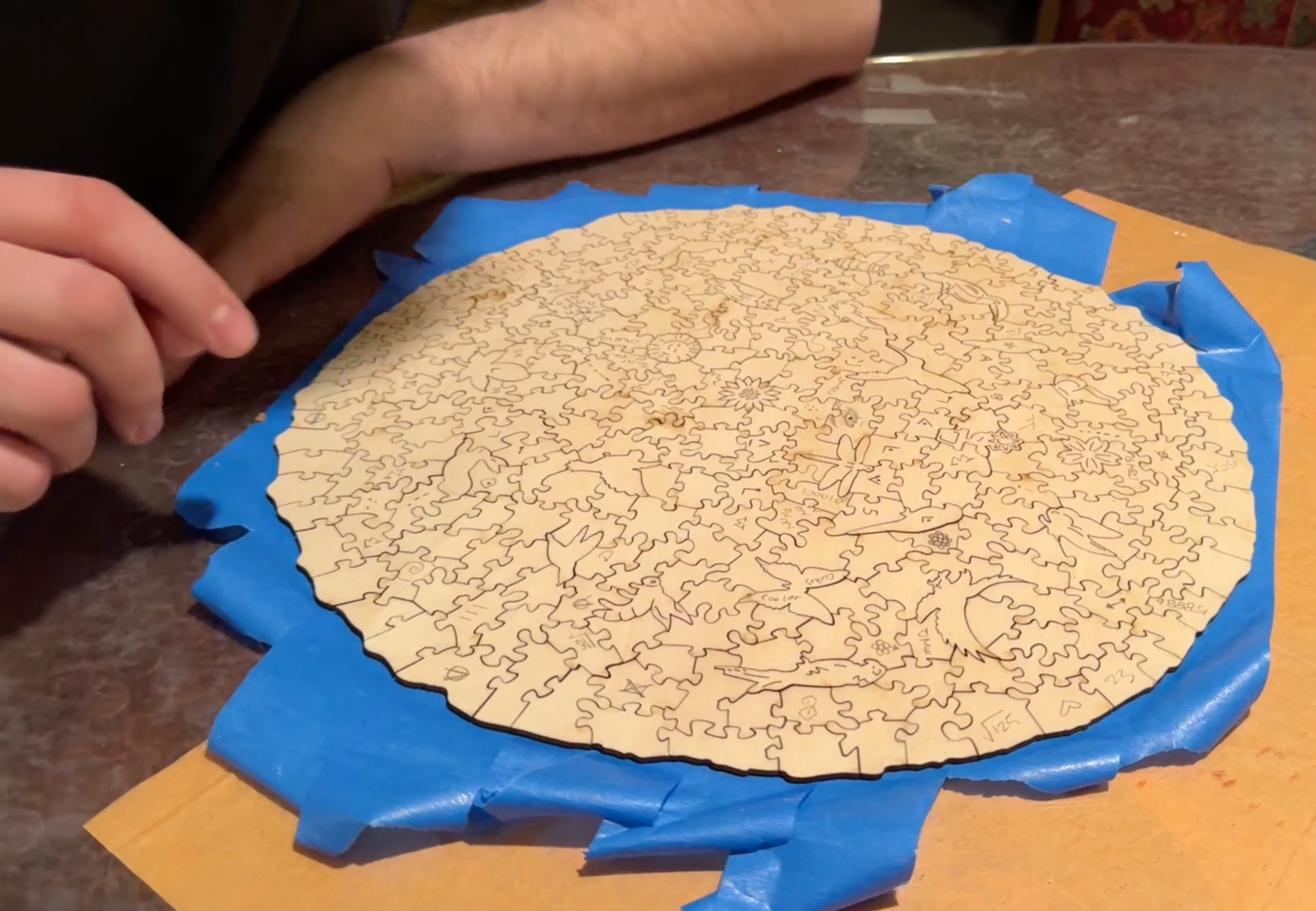
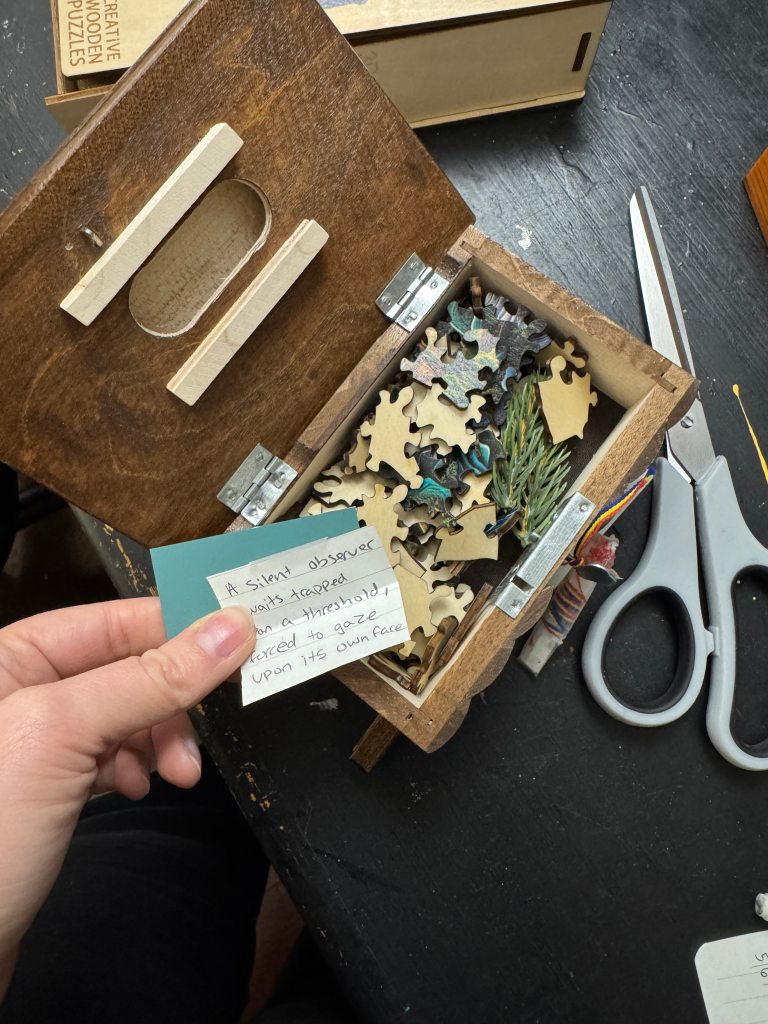
So, when Christmas rolled around last year, I decided to make it a tradition. Once again, I hid the presents and created a series of riddles and coded messages (this time incorporating nyctography), but I wanted to challenge myself to make it more complicated. So, I decided I’d make a theme to my complexity each year. That year, I decided my theme would be “jigsaw puzzles”. I got an unusual shaped puzzle, it was round with jagged pieces so it was nearly impossible to tell what was an edge piece from a middle piece. Then, I spent hours putting it together one night when he was working late. Once I had enough of it assembled, I flipped it over and added more coded messages to the back! He had a great time solving the puzzles and riddles, and once again I loved watching him excitedly working his way through my christmas scavenger hunt.
That brings us to Christmas 2025.

Driven by the success of earlier years, I decided to give myself plenty of prep time, brainstorming as early as February. By April I knew what I wanted my theme to be: keys (based on a passing comment from my partner that he wanted to learn how to lockpick). By May I knew I wanted to include a lockpick kit, and that I wanted to get a small chest with a large padlock and antique looking key. 

That’s when my ambition got the better of me. 

Here’s my train of thought: Keys, ok, why not a padlock? Oh, and then I can make him learn how to lockpick to get to his presents. Hey, you know what else has keys? Computers. What if I did something that led him to a locked file on the computer? Wait, what if I MAKE A VIDEO GAME. 

Yes, I know, my brain is a crazy thought train with zero brakes. 

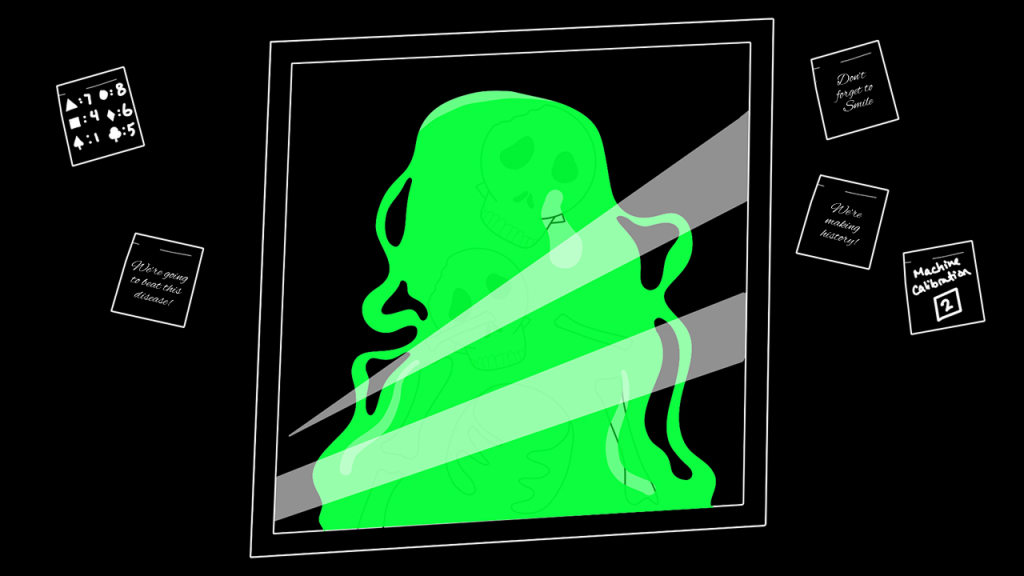
Anyway, that’s how the idea for SLIMEPOCALYPSE was born. I had never made a video game before. I was very familiar with UX/UI design, however, as I had built the interface for a software and several websites. I knew I wanted to start out simple, to give myself room to grow it each year. My first thought was a fully text-based game, no graphics, similar to classic OG text adventure games like “A Dark Room” or “Zork Colossal Cave Adventure”. 

So, I took to writing. Pulling on all my Dungeons and Dragons experience, I started by describing the room, then picked different text inputs that the player could put in and what the responses would be, as well as responses for any other text inputs outside an approved list. 

I wrote and wrote…

And wrote…

And after over six pages, and several hours of planning, I was almost done…with two rooms out of a planned 25. 

It was then that it occurred to me that my spouse (a lover of audio books but not so much physical reading) may not appreciate a fully text-based video game. So, I went back to the drawing board and began planning out a game with more visuals. It went through a lot of different versions, until I finally settled on a basic point and click adventure game. 

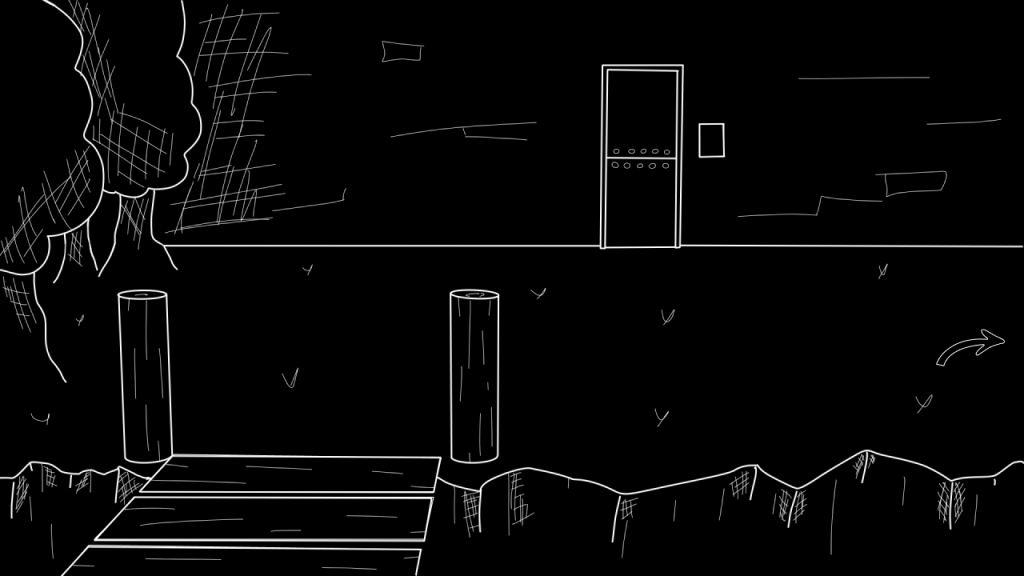
Even though I decided not to use those six pages of content, the writing did allow me to fully flesh out a unique backstory and world. Plus, before writing I had planned out the world on a 5X5 grid, so I at least knew what scenes I needed to draw for my adventure. So, I dedicated spaces in my notebook to flesh out the smaller details of each scene, then moved into Adobe Fresca on my iPad to sketch them out. 


That’s when I became a little, particular I guess you could say. I started sketching, but felt like my perspective was shifting too much. If I was going to do this, it was going to be done properly. I didn’t want things getting weird proportions, or inconsistencies between rooms. 

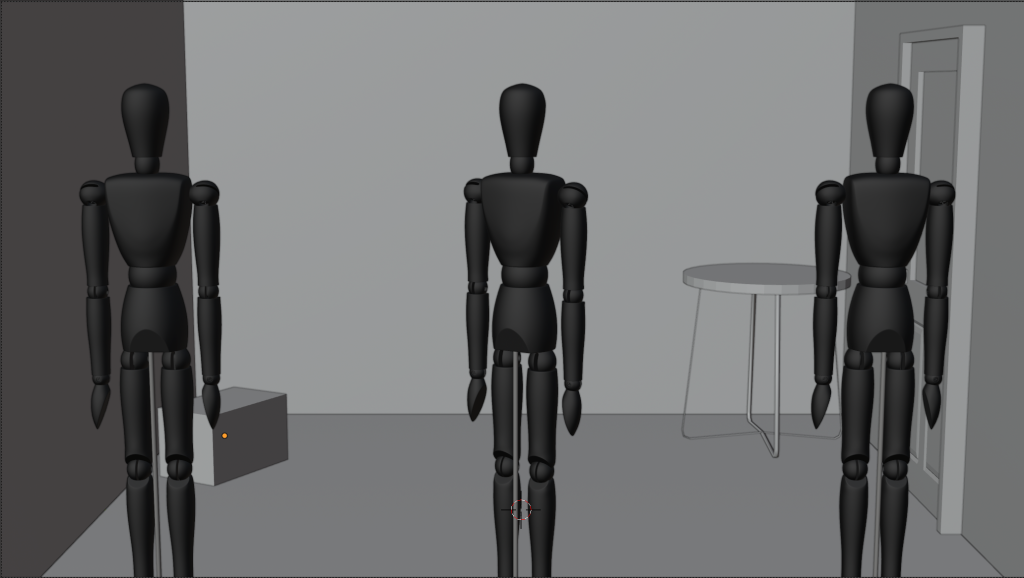
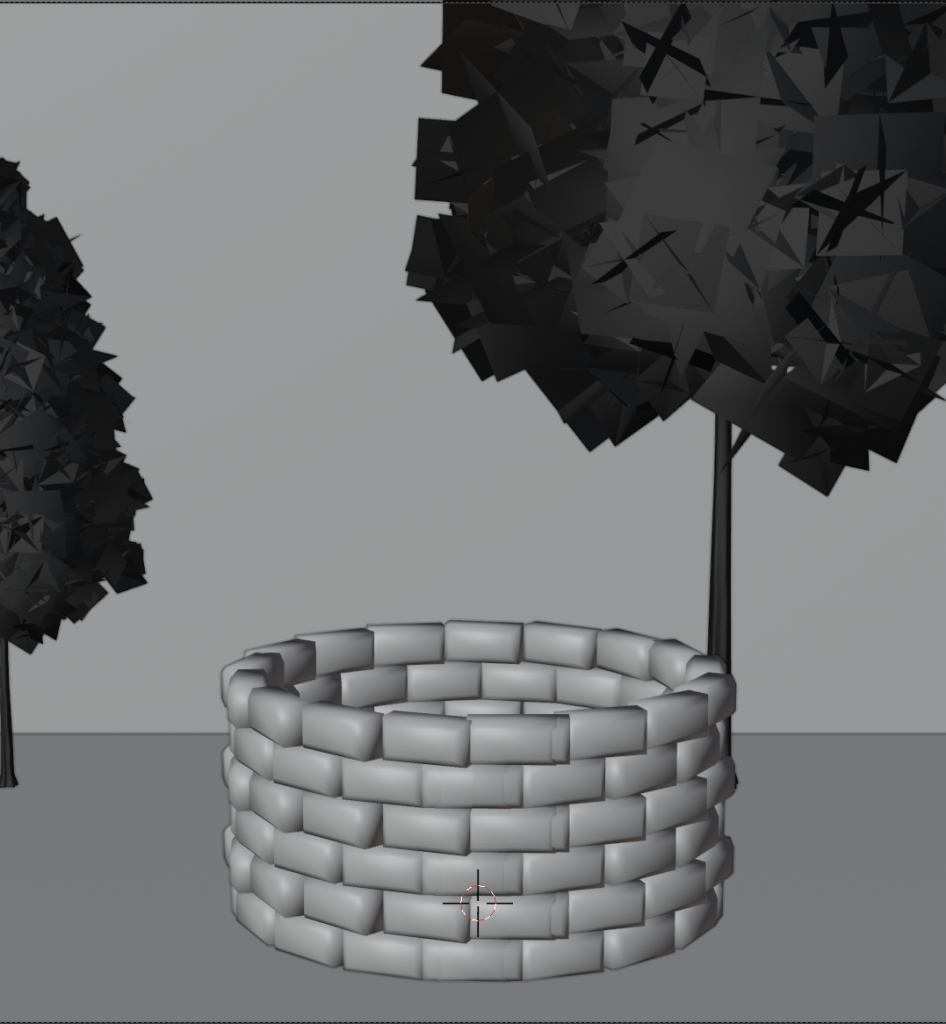
So I did what every logical multi-talented designer would do in this position: I built out the whole world in the 3D modeling program, Blender. 


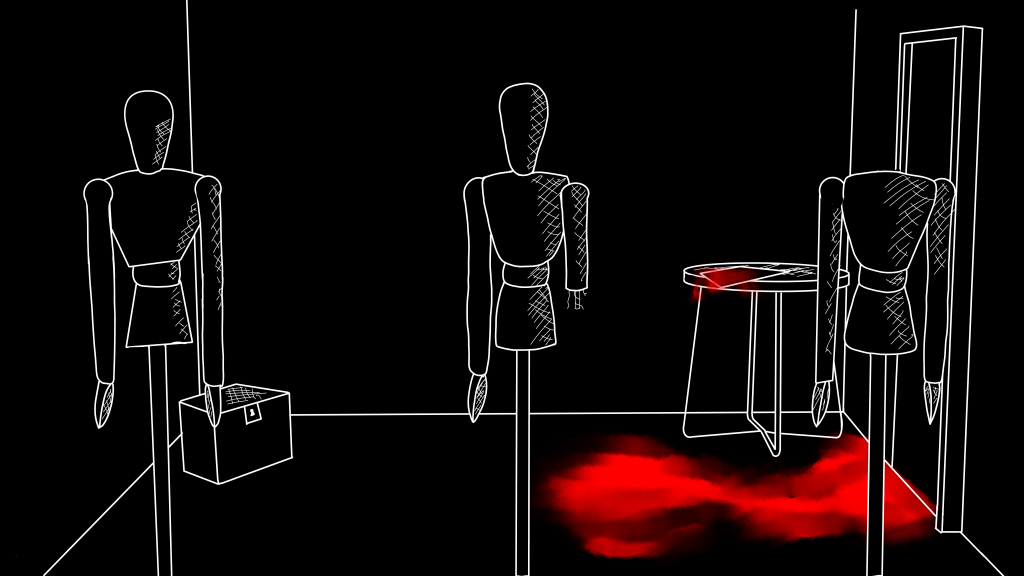
Ok, maybe not so sane on my part, but it did what I wanted it to do! Once I had the world set up the way I wanted to, using shapes in place of different objects I knew I wanted in the room, I screenshot every scene I needed and used those screenshots as reference images for my actual sketches. 

Part way through me doing this, I realized I wanted to incorporate a sudoku-type puzzle utilizing the grid based plan, so I cut some of the originally planned rooms and switched to a 4X4 grid. Having done some UX/UI work in the past, I made sure to design with different states in mind for clickable objects. 

Once I had all my planned rooms drawn out, I moved to Figma to create a proper prototype of my game. This really helped me get the finer details ironed out. For a month or so I was jumping between Figma and Fresca, drawing new buttons or refining the background when I changed my mind on how something should work. 

Before I knew it, I was already nearing the end of October! Luckily I had fully fleshed out my game, but I was just about to start the hard part: learning how to program a game. 

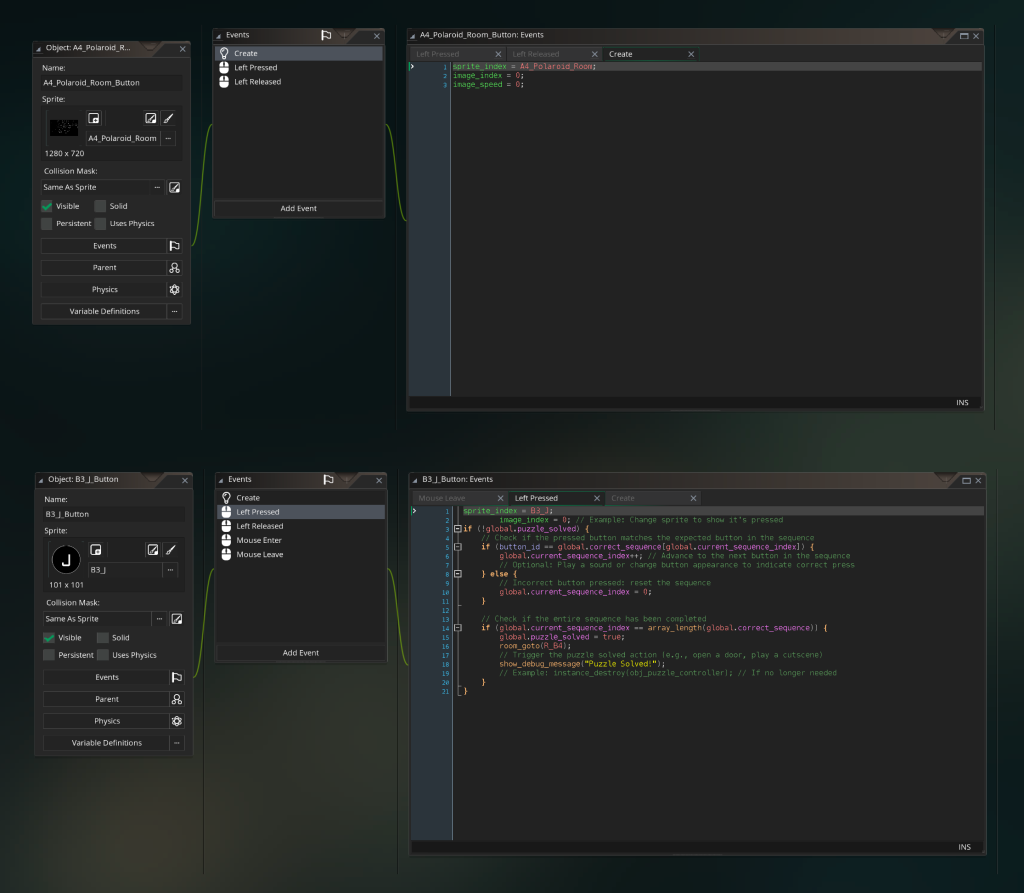
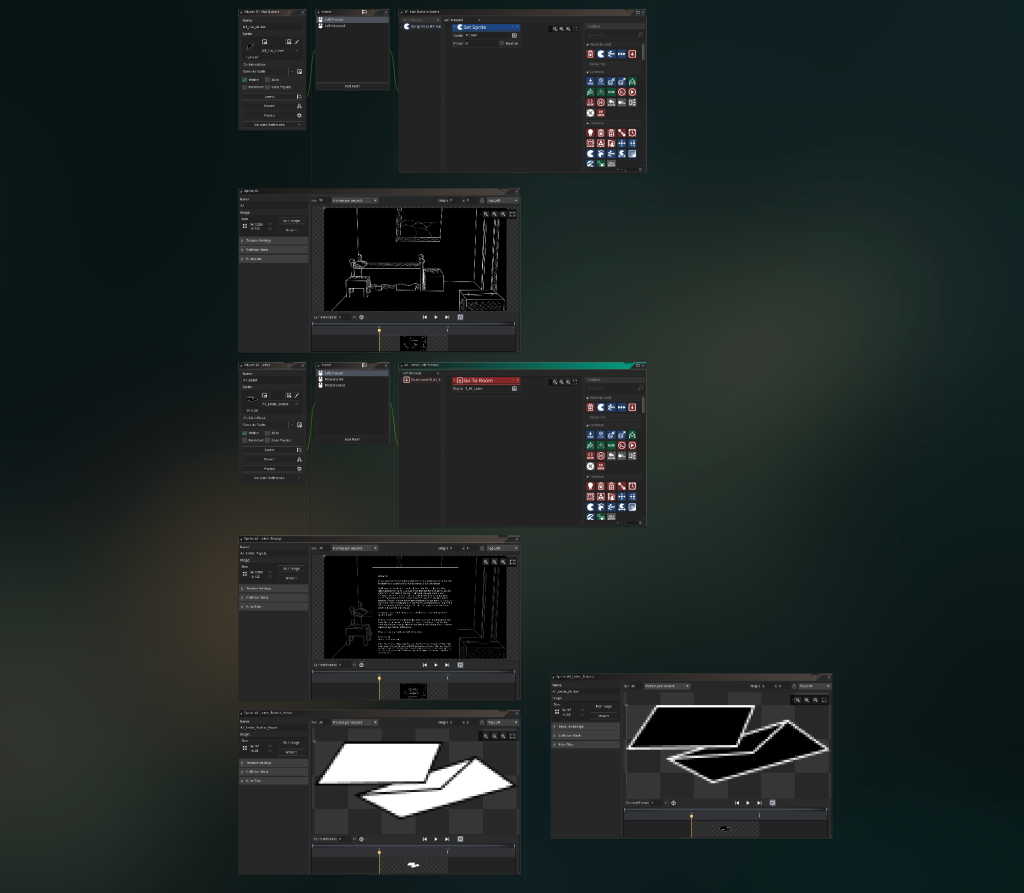
I did quite a bit of research on different game building platforms, and ended up deciding on Game Maker Studio. I highly recommend the program, it’s great for beginners as it has an optional visual coding interface (though I ended up sticking to the actual code most of the time as it was faster and a lot of what I needed to do required custom code). It was my first time using the program, so there’s A LOT I would do differently next time, since I have my bearings. Most notably, I would improve my organization system. 


I had a functional game! I was nearing the end of November, and I knew I wanted to give him lots of time in case some of the puzzles required more time. Even though the time was getting tight, I insisted on having a close family member do a play test, to work out any kinks. And boy am I glad I did that! There wasn’t anything game-breaking, but just watching him work through the puzzles, where he instinctively moved his mouse, how he interpreted certain situations, gave me a massive amount of insight and endless ideas on how to improve the game before my partner got his hands on it. I refined, moved assets around, added hidden animations, and by the end of it I had a game that I was truly proud of!

There were some finer details to work out for the physical components of his scavenger hunt, like the coded messages and riddles, as well as a custom-designed jigsaw puzzle. I was able to get it all done in time though! Before I knew it, there were two weeks until Christmas, and the perfect time to give him the puzzle box that would start his present hunting journey. 

He was absolutely blown away when he got to the video game component of his scavenger hunt. Since it was my first ever game, he in no way was expecting it. The puzzles worked just the way I was hoping they would, and aside from a couple small mistakes he didn’t even notice, I’d say it was a complete success! This kicked off a whole new interest for me, and I already have ideas for next year’s game and all the convoluted, overly complicated puzzles that will be presented to him. 

You might also like:
Case Study

Slimepocalypse

The winter holidays are pretty hectic, especially for someone who loves to give gifts. There are just too many people to consider, and I for one get pretty overloaded. One Christmas, however, a few years ago, my partner and I decided to set some new ground rules. Rather than being stressed about getting enough presents for each other, we’d stick to small things, and get a joint gift using our savings. That way it’s one less thing to worry about, at least in theory. 

Unfortunately, it’s not always that simple with me. I’m known to go above and beyond, especially for those I care about. So, as Christmas approached rapidly, I looked at the few wrapped gifts I had gotten for my husband and felt like I should be doing more. After a lot of thought, I realized I could do a spin on Christmas. So, I hid the presents. I made sure to pick weird places, like the compartment for a spare tire in his car, and the fall decoration tub in our garage. 

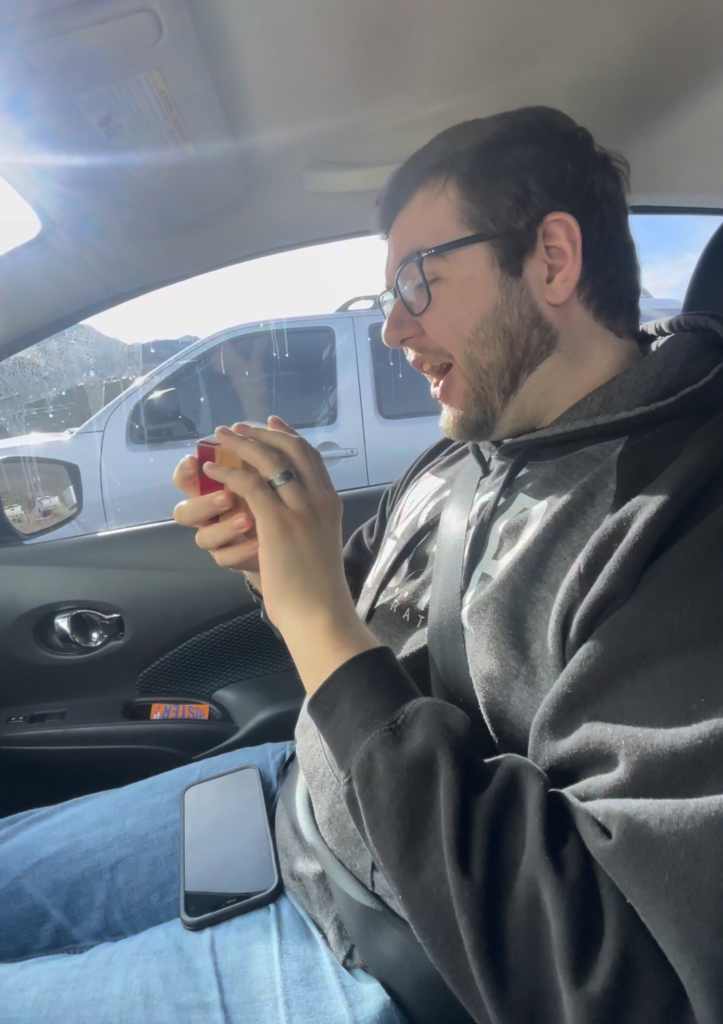
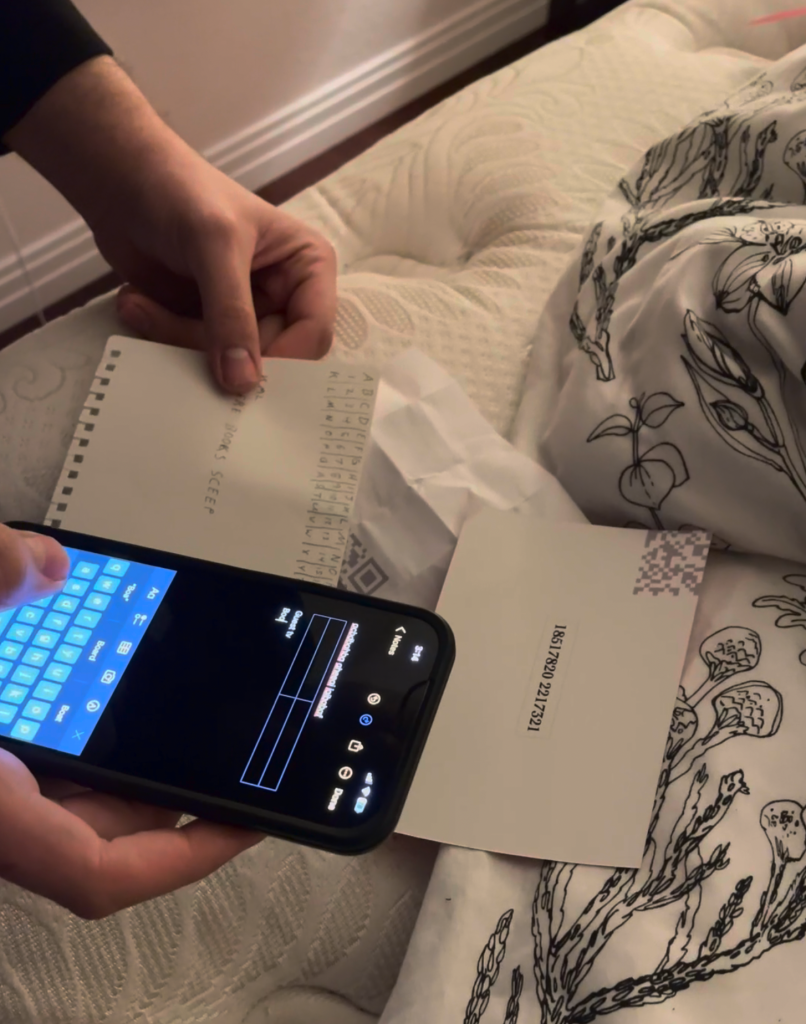
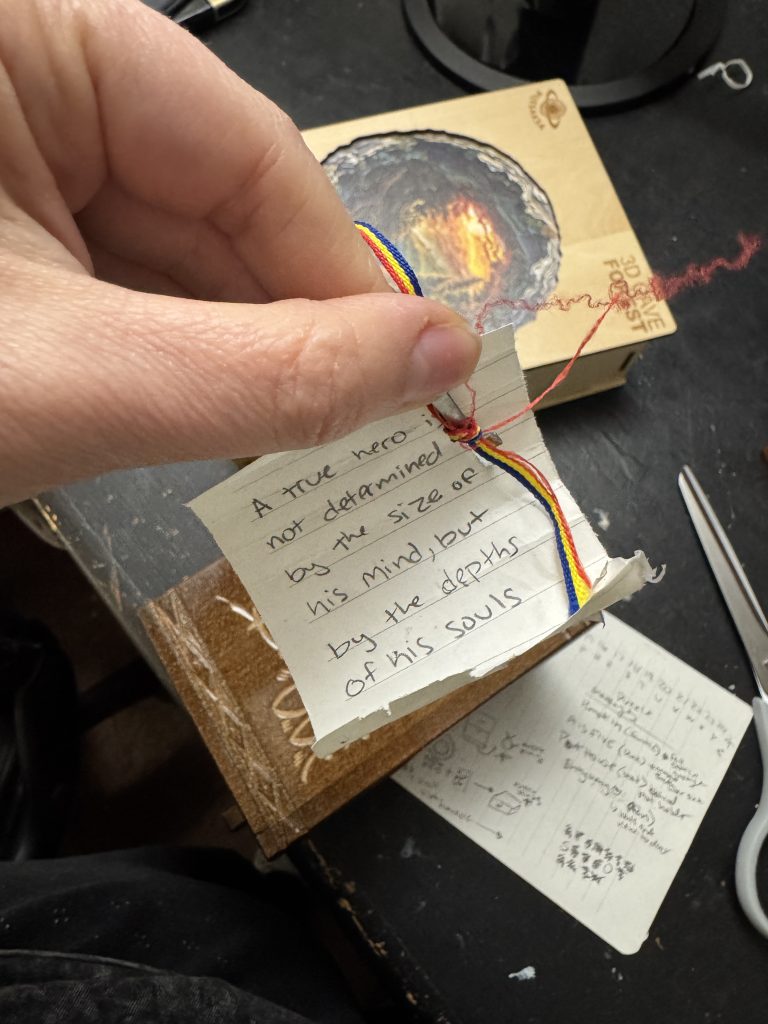
Next, I developed a series of christmas themed riddles, and hid them behind coded messages (a combination of shifted alpha-numeric and pig pen) and put the first hint in a puzzle box. A week before Christmas, I hid the puzzle box in his glove compartment and pretended to need something from it when we were coming home from a trip. He loved every second of it, and did a great job solving all the puzzles. 

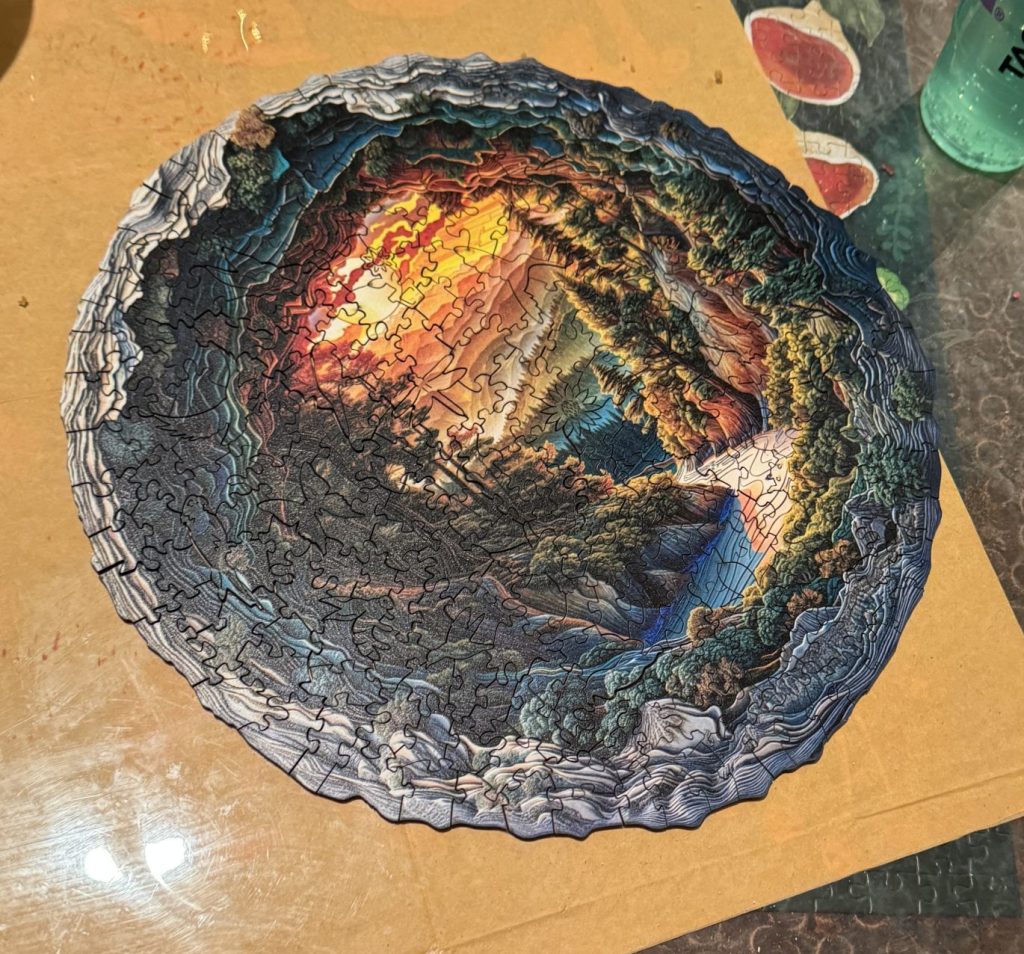
So, when Christmas rolled around last year, I decided to make it a tradition. Once again, I hid the presents and created a series of riddles and coded messages (this time incorporating nyctography), but I wanted to challenge myself to make it more complicated. So, I decided I’d make a theme to my complexity each year. That year, I decided my theme would be “jigsaw puzzles”. I got an unusual shaped puzzle, it was round with jagged pieces so it was nearly impossible to tell what was an edge piece from a middle piece. Then, I spent hours putting it together one night when he was working late. Once I had enough of it assembled, I flipped it over and added more coded messages to the back! He had a great time solving the puzzles and riddles, and once again I loved watching him excitedly working his way through my christmas scavenger hunt.
That brings us to Christmas 2025.

Driven by the success of earlier years, I decided to give myself plenty of prep time, brainstorming as early as February. By April I knew what I wanted my theme to be: keys (based on a passing comment from my partner that he wanted to learn how to lockpick). By May I knew I wanted to include a lockpick kit, and that I wanted to get a small chest with a large padlock and antique looking key. 

That’s when my ambition got the better of me. 

Here’s my train of thought: Keys, ok, why not a padlock? Oh, and then I can make him learn how to lockpick to get to his presents. Hey, you know what else has keys? Computers. What if I did something that led him to a locked file on the computer? Wait, what if I MAKE A VIDEO GAME. 

Yes, I know, my brain is a crazy thought train with zero brakes. 

Anyway, that’s how the idea for SLIMEPOCALYPSE was born. I had never made a video game before. I was very familiar with UX/UI design, however, as I had built the interface for a software and several websites. I knew I wanted to start out simple, to give myself room to grow it each year. My first thought was a fully text-based game, no graphics, similar to classic OG text adventure games like “A Dark Room” or “Zork Colossal Cave Adventure”. 

So, I took to writing. Pulling on all my Dungeons and Dragons experience, I started by describing the room, then picked different text inputs that the player could put in and what the responses would be, as well as responses for any other text inputs outside an approved list. 

I wrote and wrote…

And wrote…

And after over six pages, and several hours of planning, I was almost done…with two rooms out of a planned 25. 

It was then that it occurred to me that my spouse (a lover of audio books but not so much physical reading) may not appreciate a fully text-based video game. So, I went back to the drawing board and began planning out a game with more visuals. It went through a lot of different versions, until I finally settled on a basic point and click adventure game. 

Even though I decided not to use those six pages of content, the writing did allow me to fully flesh out a unique backstory and world. Plus, before writing I had planned out the world on a 5X5 grid, so I at least knew what scenes I needed to draw for my adventure. So, I dedicated spaces in my notebook to flesh out the smaller details of each scene, then moved into Adobe Fresca on my iPad to sketch them out. 


That’s when I became a little, particular I guess you could say. I started sketching, but felt like my perspective was shifting too much. If I was going to do this, it was going to be done properly. I didn’t want things getting weird proportions, or inconsistencies between rooms. 

So I did what every logical multi-talented designer would do in this position: I built out the whole world in the 3D modeling program, Blender. 
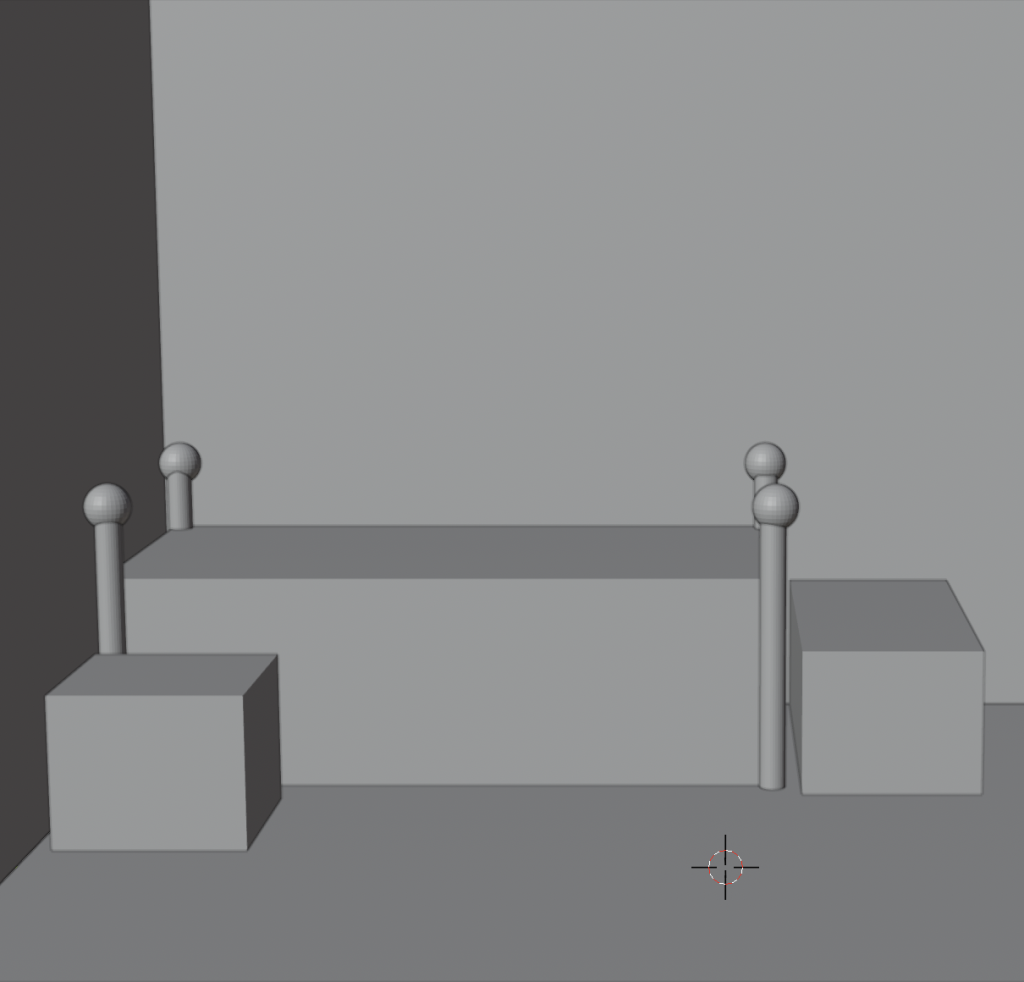
 

Ok, maybe not so sane on my part, but it did what I wanted it to do! Once I had the world set up the way I wanted to, using shapes in place of different objects I knew I wanted in the room, I screenshot every scene I needed and used those screenshots as reference images for my actual sketches. 

Part way through me doing this, I realized I wanted to incorporate a sudoku-type puzzle utilizing the grid based plan, so I cut some of the originally planned rooms and switched to a 4X4 grid. Having done some UX/UI work in the past, I made sure to design with different states in mind for clickable objects. 
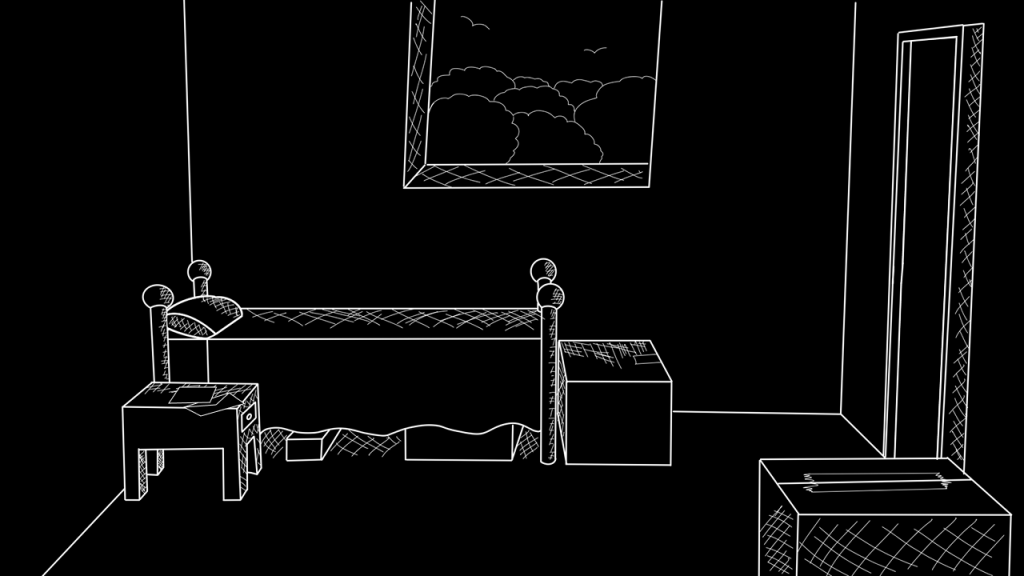
Once I had all my planned rooms drawn out, I moved to Figma to create a proper prototype of my game. This really helped me get the finer details ironed out. For a month or so I was jumping between Figma and Fresca, drawing new buttons or refining the background when I changed my mind on how something should work. 

Before I knew it, I was already nearing the end of October! Luckily I had fully fleshed out my game, but I was just about to start the hard part: learning how to program a game. 

I did quite a bit of research on different game building platforms, and ended up deciding on Game Maker Studio. I highly recommend the program, it’s great for beginners as it has an optional visual coding interface (though I ended up sticking to the actual code most of the time as it was faster and a lot of what I needed to do required custom code). It was my first time using the program, so there’s A LOT I would do differently next time, since I have my bearings. Most notably, I would improve my organization system. 
 

I had a functional game! I was nearing the end of November, and I knew I wanted to give him lots of time in case some of the puzzles required more time. Even though the time was getting tight, I insisted on having a close family member do a play test, to work out any kinks. And boy am I glad I did that! There wasn’t anything game-breaking, but just watching him work through the puzzles, where he instinctively moved his mouse, how he interpreted certain situations, gave me a massive amount of insight and endless ideas on how to improve the game before my partner got his hands on it. I refined, moved assets around, added hidden animations, and by the end of it I had a game that I was truly proud of!

There were some finer details to work out for the physical components of his scavenger hunt, like the coded messages and riddles, as well as a custom-designed jigsaw puzzle. I was able to get it all done in time though! Before I knew it, there were two weeks until Christmas, and the perfect time to give him the puzzle box that would start his present hunting journey. 

He was absolutely blown away when he got to the video game component of his scavenger hunt. Since it was my first ever game, he in no way was expecting it. The puzzles worked just the way I was hoping they would, and aside from a couple small mistakes he didn’t even notice, I’d say it was a complete success! This kicked off a whole new interest for me, and I already have ideas for next year’s game and all the convoluted, overly complicated puzzles that will be presented to him. 

Case Study