Case Study

Soil Testing Kit

While acting as the in-house creative director at Substrata, a biochemical manufacturing company, I had the pleasure to be involved in several unique and interesting projects. Among them, the soil testing kit stands out, with the trial and error needed to get the piece just right. 

To provide some background, Substrata sells several chemical solutions, ranging from cleaning to agriculture. Their flagship product, however, is a soil stabilizer named Perma-Zyme that uses enzymes to fuse together clay particles in soil to create a driveable road base that produces significantly less dust when driven on. Since this product caters to the road building industry, the primary clients are governments and individuals with private roads. 

The enzymes in Perma-Zyme’s chemical solution target organic clay matter in the soil, needing a certain percentage of clay in order to work properly. If there isn’t enough clay, then additional soil needs to be hauled onto the site to compensate, incurring an additional cost for the client. There are a lot of ways to test the soil for clay content, the go-to method being to collect a sample to send off to a geotechnical firm that runs proper tests to break down all the materials present. It takes some time for a report to come back, however, and can cost a pretty penny. 

The CEO of Substrata brought all this to my attention, and proposed we develop a more affordable way for clients to test the soil so they don’t get too far into the sales process before discovering the product won’t work with their soil. He suggested something involving a hand test, where the user wets the soil and attempts to roll it out, testing the plasticity.

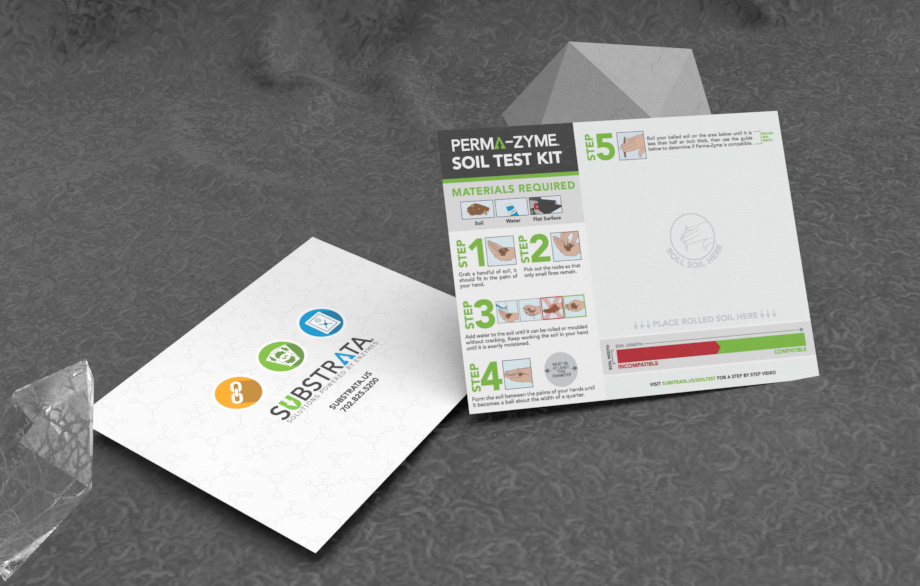
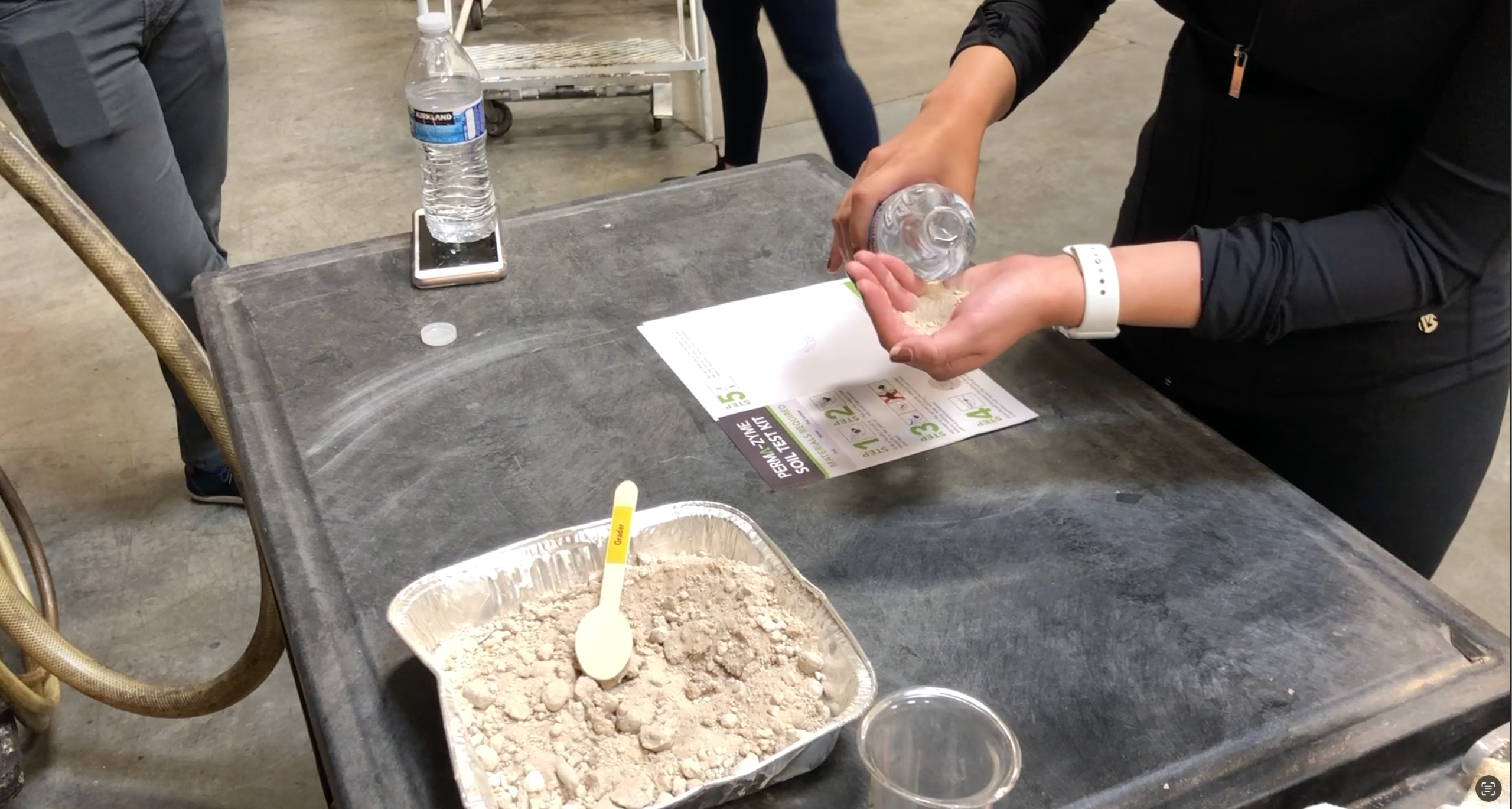
Our initial vision for this project was a thin acrylic sheet with a sticker on it walking the user through the different steps of a hand soil test, pulling design inspiration from Ikea instruction manuals by including simplified illustrations. While the rest of my team worked on pricing out this idea, I wrote detailed instructions for the piece, and took photos of a team member performing the process to act as a reference image for the drawings. 

Once the project was quoted out, we realized an acrylic sheet and sticker design was beyond our budget, so after reviewing several print samples we pivoted to more of a thick waterproof cardstock. 

After the design was completed, my team performed several user tests. I consider user tests essential for projects like this, it’s honestly my favorite part of my job. I love to stress test my designs to make sure the user is experiencing it the way I want. For this project, we made sure there was enough space for the user to roll out the soil after it was wet, and tested variations of soil that might be grabbed to fit in the instructed section. We then tweaked the design as needed, and performed more user tests. After we were sufficiently satisfied with the result, we sent the art off to be printed!
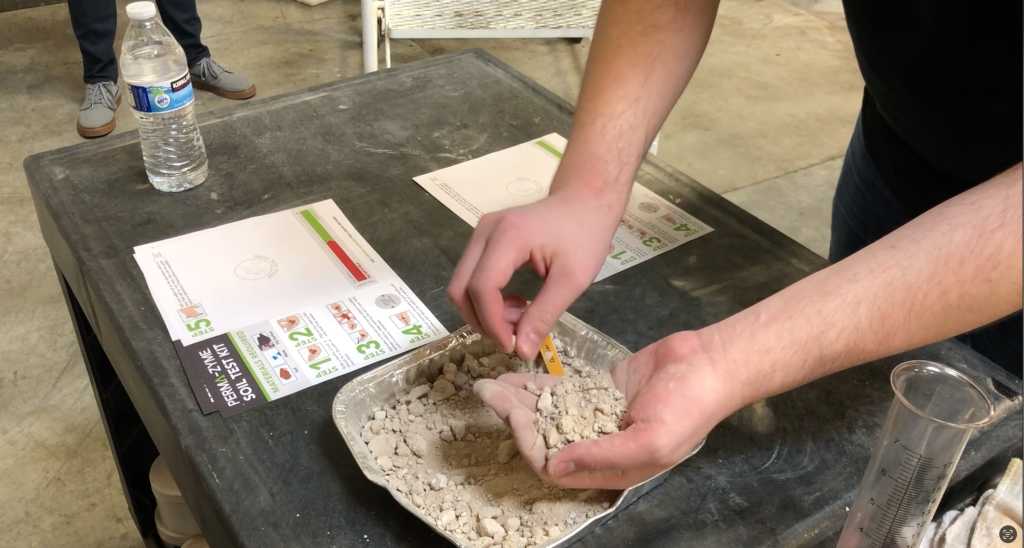
The final result was extremely successful. The sales team loved being able to send out such simple instructions, and felt it significantly helped move potential customers along the sales funnel. Our CEO loved this piece as well, as he was often traveling to visit clients during road construction and he often took a few tests along with him to help demonstrate the part clay has to play in the process. 

Projects like these light a fire under me, and act as a reminder of what exactly about my profession I enjoy: problem solving. With each new project comes a new and interesting problem to solve, and it’s our job to make it as effective as possible. As designers, I think we sometimes get hung up on making something look cool or fun, that we forget it also needs to be functional. But working in so many different mediums throughout my career has helped me keep a critical eye towards my work, constantly considering how the user will experience it across several different platforms. Man, I really love what I do!

You might also like:
Case Study

Soil Testing Kit

While acting as the in-house creative director at Substrata, a biochemical manufacturing company, I had the pleasure to be involved in several unique and interesting projects. Among them, the soil testing kit stands out, with the trial and error needed to get the piece just right. 

To provide some background, Substrata sells several chemical solutions, ranging from cleaning to agriculture. Their flagship product, however, is a soil stabilizer named Perma-Zyme that uses enzymes to fuse together clay particles in soil to create a driveable road base that produces significantly less dust when driven on. Since this product caters to the road building industry, the primary clients are governments and individuals with private roads. 

The enzymes in Perma-Zyme’s chemical solution target organic clay matter in the soil, needing a certain percentage of clay in order to work properly. If there isn’t enough clay, then additional soil needs to be hauled onto the site to compensate, incurring an additional cost for the client. There are a lot of ways to test the soil for clay content, the go-to method being to collect a sample to send off to a geotechnical firm that runs proper tests to break down all the materials present. It takes some time for a report to come back, however, and can cost a pretty penny. 

The CEO of Substrata brought all this to my attention, and proposed we develop a more affordable way for clients to test the soil so they don’t get too far into the sales process before discovering the product won’t work with their soil. He suggested something involving a hand test, where the user wets the soil and attempts to roll it out, testing the plasticity.

Our initial vision for this project was a thin acrylic sheet with a sticker on it walking the user through the different steps of a hand soil test, pulling design inspiration from Ikea instruction manuals by including simplified illustrations. While the rest of my team worked on pricing out this idea, I wrote detailed instructions for the piece, and took photos of a team member performing the process to act as a reference image for the drawings. 

Once the project was quoted out, we realized an acrylic sheet and sticker design was beyond our budget, so after reviewing several print samples we pivoted to more of a thick waterproof cardstock. 

After the design was completed, my team performed several user tests. I consider user tests essential for projects like this, it’s honestly my favorite part of my job. I love to stress test my designs to make sure the user is experiencing it the way I want. For this project, we made sure there was enough space for the user to roll out the soil after it was wet, and tested variations of soil that might be grabbed to fit in the instructed section. We then tweaked the design as needed, and performed more user tests. After we were sufficiently satisfied with the result, we sent the art off to be printed!
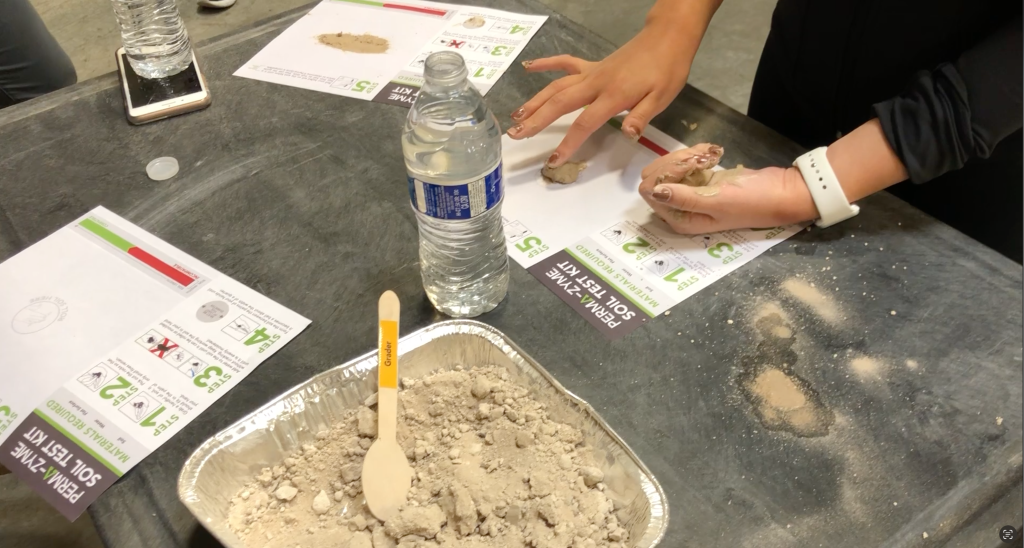
The final result was extremely successful. The sales team loved being able to send out such simple instructions, and felt it significantly helped move potential customers along the sales funnel. Our CEO loved this piece as well, as he was often traveling to visit clients during road construction and he often took a few tests along with him to help demonstrate the part clay has to play in the process. 
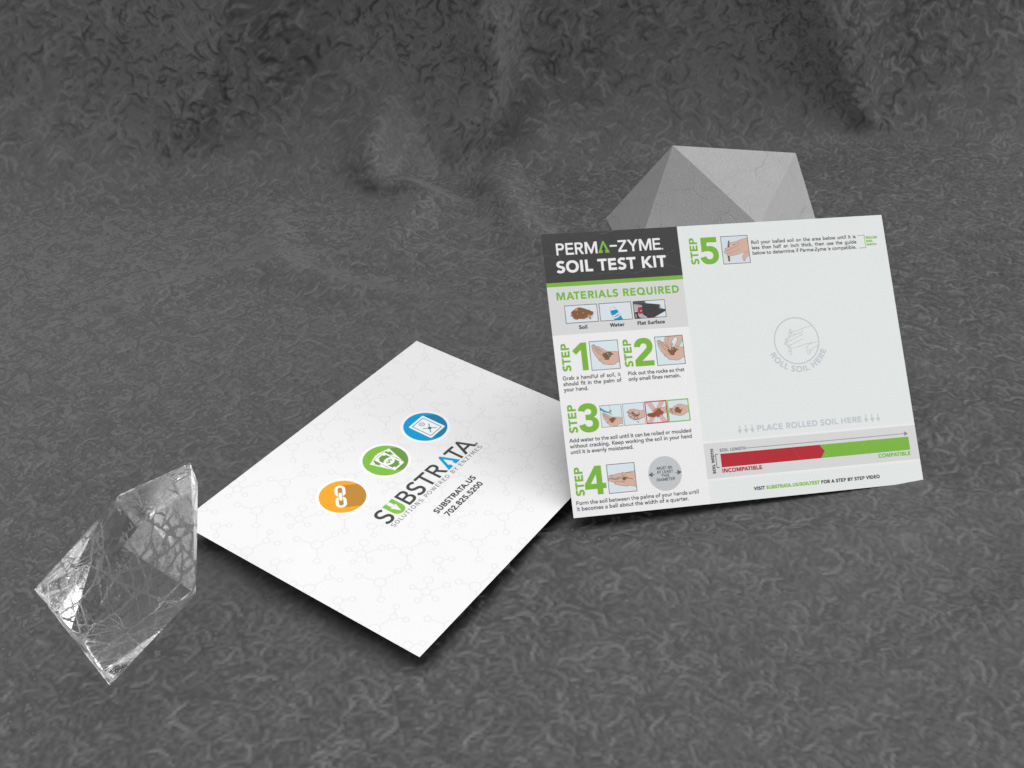
Projects like these light a fire under me, and act as a reminder of what exactly about my profession I enjoy: problem solving. With each new project comes a new and interesting problem to solve, and it’s our job to make it as effective as possible. As designers, I think we sometimes get hung up on making something look cool or fun, that we forget it also needs to be functional. But working in so many different mediums throughout my career has helped me keep a critical eye towards my work, constantly considering how the user will experience it across several different platforms. Man, I really love what I do!

Case Study